
You Drew: The Four of Clubs
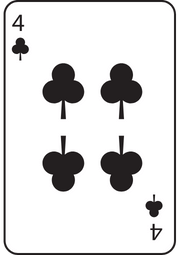
The Betrayal in Your Circle
You Chose
The 4 of Clubs
This is the card of deceit, betrayal from someone you trusted, and the destabilization that happens when the foundation you built on turns out to be weaker than you thought. You drew this card because someone in your professional or personal circle isn't being honest with you—and on some level, you already know it.
The Working Man's Wisdom
In traditional cartomancy, the 4 of Clubs is one of the darker cards in the suit of achievement and work. While most Clubs speak of success and prosperity, the 4 warns of betrayal, deceit from a trusted colleague or friend, and a change for the worse in your professional circumstances. Historically, this card appeared when a business partner embezzled funds, when a trusted employee stole clients, or when a friend revealed private business information to competitors.
The number four traditionally represents foundation, stability, and structure. But when it appears in a challenging context, it signifies that the foundation you thought was solid is actually crumbling. Someone you relied on isn't reliable. Someone you trusted with your plans is working against you. Someone you thought had your back is positioning themselves to benefit from your downfall.
The old cartomancers taught that the 4 of Clubs appears not to destroy you, but to warn you before the damage becomes irreparable. It's a chance to protect yourself, to investigate suspicious behavior, and to shore up the vulnerable parts of your business or reputation before betrayal becomes catastrophe.
Why This Card Showed Up Now
You chose the 4 of Clubs because something feels off. Maybe it's a colleague who's been acting differently—distant, secretive, overly interested in parts of your business they don't need to know about. Maybe it's a business partner whose stories don't quite add up when you ask about finances. Maybe it's a friend who keeps bringing up your struggles to other people, framing it as concern but really undermining your credibility.
This card shows up when you're trying to convince yourself you're being paranoid. You don't want to believe someone you trusted could betray you, so you're explaining away the red flags. "They're just busy." "I'm being too sensitive." "They wouldn't do that to me." But deep down, your instincts are screaming that something is wrong.
The 4 of Clubs appears when the betrayal is either happening now or about to happen—and you still have time to protect yourself if you act quickly. This card is your intuition trying to get your attention before trust becomes your downfall.

The Work Truth You Need to Hear
Here's what you need to understand: loyalty is rare, and trust should be earned slowly, not given freely. The person who's betraying you (or about to) probably didn't start with malicious intent. They started with their own self-interest, and when your success, your resources, or your position became inconvenient to their goals, they chose themselves over you. That's not personal—it's human nature when integrity isn't strong.
Stop making excuses for suspicious behavior. If the numbers don't add up, demand transparency. If someone's story keeps changing, ask direct questions. If your instincts say something's wrong, investigate instead of ignoring it because confrontation feels uncomfortable. Your reluctance to seem "untrusting" is exactly what allows betrayal to succeed.
The 4 of Clubs is also telling you to examine your own role: Did you share too much too soon? Did you give access to sensitive information before proving someone's loyalty? Did you trust someone's words without verifying their actions? This isn't about blaming yourself for someone else's dishonesty—but it is about learning to protect yourself better in the future.
Most importantly: when betrayal is confirmed, cut ties quickly and completely. Don't give second chances to people who proved they'll sabotage you when it benefits them. Don't stay in partnerships with people who steal. Don't keep friends who gossip about your struggles to elevate themselves. Move on, rebuild, and protect what remains.
What This Teaches About Success
The 4 of Clubs teaches you that protecting your business, your reputation, and your resources is as important as building them. You can work hard for years to create something valuable, but one untrustworthy person with access can destroy it in months if you're not paying attention.
This card is teaching you discernment—the ability to distinguish between people who genuinely support your success and people who attach themselves to you to benefit from your work while contributing nothing or, worse, actively undermining you. Not everyone who's friendly is a friend. Not everyone who's in your circle has your best interests at heart.
You're learning that documentation, contracts, and keeping certain information private aren't signs of distrust—they're signs of wisdom. Successful people protect what they build. They don't share financial details with everyone. They don't give access to proprietary information until loyalty is proven. They verify instead of blindly trusting.
The lesson isn't to become paranoid or to trust no one. It's to trust strategically, to verify claims, to keep evidence, and to remove people from your circle the moment they prove they're not trustworthy.
Your Next Move
1. Verify Your Suspicions with Evidence
If something feels wrong, investigate quietly. Check financial records. Review contracts. Audit who has access to what. Talk to other people in your network to see if they've noticed similar behavior. Don't confront based on feelings alone—gather evidence first. The 4 of Clubs warns of betrayal, but you need proof before you act.
2. Limit Access Immediately
While you're investigating, restrict the suspicious person's access to sensitive information, financial accounts, clients, or proprietary work. Don't make it obvious, but protect what's vulnerable. Change passwords. Route communications differently. Create backup systems. If betrayal is happening, cutting off access stops the bleeding while you figure out next steps.
3. Have the Direct Conversation (With Backup)
Once you have evidence, confront directly but strategically. Don't do it emotionally. State facts. Ask for explanation. Document everything. If it's a business matter, have a lawyer present or at least consulted beforehand. The goal isn't to give them a chance to explain away documented betrayal—it's to make your position clear and give them an opportunity to exit cleanly rather than forcing legal action.
4. Learn and Implement New Protections
After you handle this situation, implement systems that prevent similar betrayals in the future: regular financial audits, clearer contracts with consequences for breach, separation of duties so no one person has too much power, and slower trust-building where access is earned through proven loyalty over time. Every betrayal teaches you how to build better defenses.
The Success That Awaits
When you handle this betrayal with decisiveness and strategic thinking, you'll emerge stronger and wiser. You'll look back and realize this painful experience taught you how to protect yourself, how to build systems that prevent exploitation, and how to recognize red flags before they become disasters.
You'll rebuild—this time with better boundaries, clearer contracts, and a more carefully selected inner circle. You'll discover that the people who stick around through this mess are your real allies, and they're more valuable than the person who betrayed you ever was.
Most importantly, you'll develop a skill that separates successful people from everyone else: the ability to trust wisely rather than blindly, to protect aggressively rather than passively, and to cut ties quickly when someone proves they're not worthy of your trust. These aren't cold skills—they're survival skills for anyone building something valuable.
The betrayal will sting, maybe for a while. But it won't destroy you. It will refine you.
Your Work Mantra
I trust strategically and protect fiercely. I recognize red flags quickly and act decisively. I build my success on solid ground with people who prove their loyalty through action.
The Cartomancer's Records
Did you know? In 1920s Chicago, the 4 of Clubs became infamous as "the bootlegger's warning card" during Prohibition. There's a documented story of a speakeasy owner who drew this card in a reading and was told, "Someone in your trusted circle is talking to the police." He initially dismissed it, but the reader insisted: "The 4 of Clubs never lies about betrayal—it only warns while you still have time to act." He quietly investigated and discovered his head bartender was feeding information to federal agents in exchange for immunity on his own liquor charges. The owner fired the bartender immediately, moved his operation, and avoided a raid that would have cost him everything. The cartomancers taught: "The 4 of Clubs appears when loyalty is already broken—it's giving you time to notice before betrayal becomes catastrophe." They believed this card was a gift from Fortune herself: a chance to protect yourself before trust becomes your downfall. The readers would say: "When the 4 of Clubs appears, someone close is already choosing themselves over you. Trust your instincts. Verify everything. Cut ties cleanly."